



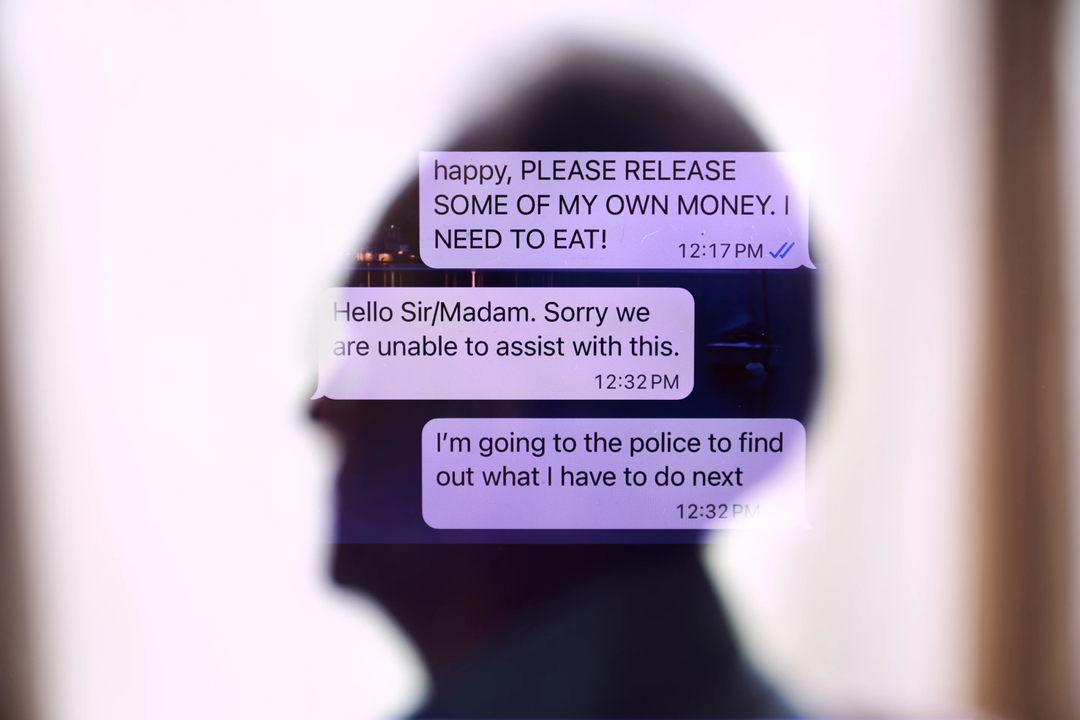
02 Sep What to Do If You’ve Been Scammed: 7 Steps to Take Now
What Should You Do If You’ve Been Scammed? How to Protect Your Money Before—and After—Financial Fraud
Maybe the text looked legitimate.
Maybe the person on the phone knew information about you that made the call seem real.
Maybe someone you’ve been communicating with online gained your trust over weeks or months.
Or maybe you’re reading this because you’ve already sent money—and something suddenly doesn’t feel right.
If you think you may be dealing with a scam, don’t send more money while you try to figure it out.
Think You’re Being Scammed Right Now? Start Here.
- STOP: Don’t send additional money, cryptocurrency, gift cards, account information, passwords, or verification codes.
- CALL: Talk to someone you trust before taking another financial action.
- VERIFY: Independently contact the person, company, financial institution, or government agency using contact information you obtain from a source you already know is legitimate—not information supplied by the person contacting you.
- CONTACT: If you’ve already sent money or provided financial information, contact the financial institution or payment provider involved as soon as possible.
- DOCUMENT: Save relevant emails, texts, usernames, phone numbers, transaction information, receipts, screenshots, and other records.
- REPORT: Consider reporting the suspected fraud to the appropriate authorities and organizations.
- PROTECT: If passwords, account credentials, or personal information may have been compromised, take steps to secure the affected accounts.
And if someone now promises they can recover the money you’ve lost in exchange for another payment, stop again. Recovery scams can target people who have already been victimized.
Financial Scams Have Become a Massive Problem
Financial scams are no longer something that can be dismissed as an occasional suspicious email with obvious spelling mistakes.
An investigation by The Associated Press and FRONTLINE reported that Americans had reported a record $15.9 billion in scam losses in the prior year, a 25% increase from 2024.
And even that number may not capture the full scope of the problem because many victims never report what happened.
In polling cited in the investigation, 98% of Americans said they suspected they had been targeted by scammers, while three in 10 said they had personally lost money or information to scams.
The victims interviewed by AP and FRONTLINE ranged in age from 32 to 90 and included doctors, IT professionals, academics, and people across different income levels. Individual reported losses among those interviewed ranged from several thousand dollars to as much as $4 million.
That’s worth emphasizing.
Being financially knowledgeable, professionally successful, or comfortable with technology does not necessarily make someone immune to a sophisticated scam.
Modern scams can be designed to build trust, create fear, manufacture urgency, or establish an emotional connection before the request for money ever arrives.
A Financial Scam Can Cost You More Than the Money You Send
One of the most troubling lessons from the AP and FRONTLINE investigation is that the financial consequences may not necessarily end when the scam is discovered.
The investigation described a widower who sought companionship online after his wife died. He ultimately lost approximately $800,000 to someone he believed was a real person.
But the original loss wasn’t the end of his financial problem.
According to the report, he was also left owing approximately $185,000 that he had borrowed and faced additional taxes associated with money he had withdrawn and subsequently lost.
Then he was targeted again.
Someone contacted him offering to help recover his stolen money by connecting him with the Secret Service—in exchange for additional money.
The financial damage didn’t necessarily stop when the original scam ended.
Depending on what happened, a financial scam could potentially affect:
- Your bank and investment accounts;
- Your retirement savings;
- Your taxes;
- Your debt;
- Your credit;
- Your monthly cash flow;
- Your ability to retire when planned; and
- Your broader financial plan.
That’s one reason acting quickly—and resisting the urge to send additional money in an attempt to fix the original loss—can be so important.
Why Smart People Still Fall for Financial Scams
One of the most damaging assumptions about scams is that victims should have simply “known better.”
The AP/FRONTLINE investigation paints a much more complicated picture.
The people interviewed weren’t one type of person. They represented different ages, professions, education levels, and financial circumstances.
What sophisticated scams often exploit isn’t necessarily someone’s intelligence.
They can exploit circumstances and emotions.
A scammer may create:
- Urgency: “You need to act immediately.”
- Fear: “Your account has been compromised.”
- Authority: “I’m calling from a government agency.”
- Opportunity: “This investment won’t be available for long.”
- Trust: A relationship is built gradually before money is requested.
- Isolation: “Don’t tell anyone about this.”
- Hope: “I can help you recover the money you already lost.”
The request for money may come only after the victim has been emotionally or psychologically invested in the story.
That’s why scam prevention shouldn’t rely exclusively on your ability to recognize a lie in the moment.
A better defense is to create rules that slow down important financial decisions before the pressure starts.
Create a Family Scam Rule Before You Need It
One of the simplest ways to introduce friction into a potential scam is to establish a family rule before anyone is under pressure.
For example:
Before anyone in our family sends a significant amount of money because of an unexpected phone call, text, email, investment opportunity, emergency, or online relationship, we call one other trusted person first.
The specific dollar amount can be determined by the family.
The important part is creating the rule in advance.
This doesn’t have to be about taking financial independence away from a parent, spouse, child, or other family member.
Think of it as a financial circuit breaker.
If a legitimate transaction has to wait long enough for one additional phone call, there’s usually little harm in verifying it.
If it’s a scam, that interruption may be exactly what prevents the money from leaving.
Someone Says Your Child or Grandchild Is in Trouble. What Should You Do?
Emergency impersonation scams can be particularly powerful because they create fear before giving you time to think.
You may receive a call, text, or message claiming that a child, grandchild, spouse, or other family member has been arrested, injured, stranded, kidnapped, or otherwise needs money immediately.
The safest response isn’t necessarily to keep interrogating the person contacting you.
Stop the communication and independently contact the person they’re claiming to represent.
Use the phone number you already have.
If you can’t reach that person, contact another trusted family member who may be able to verify what’s happening.
And don’t allow a demand for secrecy to prevent you from checking the story.
A request such as “Don’t tell Mom,” “Don’t call anyone,” or “You have to do this right now” should give you another reason to slow the transaction down.
AI Is Making Scam Messages More Convincing
The AP/FRONTLINE investigation points to advances in artificial intelligence as one factor contributing to the scale and sophistication of modern scams.
That creates a new problem for families:
Seeing—or even hearing—someone may no longer be enough by itself to verify who you’re communicating with.
AI tools can make impersonation attempts, messages, images, audio, and other communications appear more convincing than older scams.
That makes independent verification increasingly important.
Families may want to consider establishing a private verification method or family code word for unusual financial emergencies.
But even without one, the basic rule remains useful:
Don’t verify an unexpected financial request using the same communication that delivered the request.
If someone claiming to be your daughter calls asking for emergency money, hang up and call your daughter using the number already saved in your phone.
If someone says they’re from your bank, end the call and contact the bank using a trusted number, such as the number on the back of your card or another independently verified source.
If someone claims to represent a government agency, independently locate that agency’s official contact information before taking action.
Be Especially Careful When Someone Wants Cryptocurrency
Cryptocurrency appears repeatedly in the AP/FRONTLINE investigation, particularly in connection with investment scams.
The report explains that cryptocurrency can make recovery especially challenging because transfers may move across borders and through entities outside the reach of U.S. authorities.
That doesn’t mean every use of cryptocurrency is fraudulent.
But an unexpected request to move money into cryptocurrency—particularly when combined with urgency, secrecy, guaranteed-looking investment results, or instructions from someone you’ve never met in person—deserves additional scrutiny.
Before transferring money, independently verify:
- Who you’re dealing with;
- Where the money is actually going;
- Whether you can independently access the account;
- How withdrawals work;
- Whether the person or company is appropriately registered or regulated when applicable;
- What happens if you want your money back; and
- Whether anyone is pressuring you not to discuss the transaction with your family, financial professional, bank, or another trusted person.
A balance shown on a website or app doesn’t necessarily prove that the investment—or the money—is real.
If Someone Says They Can Recover Your Stolen Money, Stop and Verify
Discovering that you’ve been scammed can create an understandable urge to do anything possible to get the money back.
Scammers can exploit that urgency too.
The AP/FRONTLINE investigation describes victims who were targeted again after the original fraud.
In one case, a victim who had already lost hundreds of thousands of dollars searched for help and ultimately paid three supposed recovery companies a combined $23,000. According to the report, none of those companies was legitimate.
This type of situation deserves its own rule:
Do not assume someone offering to recover stolen money is legitimate simply because they know you’ve been scammed.
Be particularly cautious if someone:
- Contacts you unexpectedly after a scam;
- Promises or guarantees that your money can be recovered;
- Claims to have special access to law enforcement or government officials;
- Requires an upfront payment;
- Asks for cryptocurrency or another difficult-to-reverse payment method;
- Requests passwords or account credentials; or
- Pressures you to act before you’ve independently verified who they are.
Being scammed once can make you a target for another scam.
If you’ve already lost money, slowing down the next decision can be just as important as acting quickly to report the original transaction.
Why a Scam Involving Your IRA or 401(k) Can Create a Tax Problem
If a scammer convinces you to withdraw money from a retirement account, the financial consequences may extend beyond the amount you send.
The AP/FRONTLINE investigation describes several victims who withdrew money from retirement accounts, lost the proceeds to scammers, and later faced significant tax bills associated with those withdrawals.
That’s an important distinction:
Losing money after withdrawing it from a retirement account doesn’t necessarily undo the tax consequences associated with the withdrawal.
For example, distributions of previously untaxed amounts from traditional IRAs and certain employer retirement accounts are generally included in taxable income. Depending on the circumstances, additional tax rules or penalties may also apply.
The tax treatment of a fraud or theft loss can be complicated and depends on the specific circumstances and tax law in effect at the time.
If retirement money has already been withdrawn as part of a suspected scam, consider speaking with an appropriate tax professional promptly rather than assuming the financial loss automatically offsets the taxable distribution.
You may also want to discuss the situation with your financial professional so you can understand how the withdrawal may affect the rest of your retirement plan.
What Should You Do After You’ve Sent Money to a Scammer?
If you’ve already sent money, speed can matter.
But speed doesn’t mean sending more money to someone who claims they can fix the problem.
It means quickly contacting legitimate organizations that may be able to help you document the fraud, secure your accounts, and determine whether a transaction can still be stopped or addressed.
Consider taking the following steps based on what happened:
- Stop communicating with the suspected scammer. Don’t send additional money simply because you’re told that one more payment, fee, tax, deposit, or transfer will release your funds.
- Contact the financial institution involved. If money was transferred from a bank, brokerage account, credit card, payment service, or other financial account, contact the institution using independently verified contact information.
- Explain that you believe you’ve been the victim of fraud. Provide the transaction information and ask whether any transfer can still be stopped, recalled, disputed, or otherwise addressed.
- Secure affected accounts. If you shared passwords, security codes, account numbers, or other credentials, change compromised credentials and review account-access settings.
- Preserve your evidence. Save emails, text messages, chat histories, phone numbers, usernames, transaction records, cryptocurrency wallet addresses, receipts, screenshots, and other relevant information.
- Report the incident. Depending on the type of scam, reporting to appropriate law-enforcement, consumer-protection, or regulatory authorities may help document what occurred.
- Review the rest of your financial life. Determine whether other accounts, credit, tax information, or personal information may also have been compromised.
- Tell someone you trust. A second person can help you evaluate new communications more objectively, particularly if someone begins promising that the lost money can be recovered.
Not every transaction can be reversed or recovered.
The AP/FRONTLINE investigation illustrates how difficult recovery can be, particularly when victims authorized transactions themselves or money moved through cryptocurrency and international networks.
But contacting the appropriate institution quickly may still give you more options than waiting.
Where Should You Report a Financial Scam?
Where you report a scam can depend on what happened.
There may not be one organization responsible for every type of fraud.
The AP/FRONTLINE investigation notes that victims reported incidents through a variety of law-enforcement and government channels and that the United States currently has multiple federal agencies involved in different aspects of scam prevention and enforcement.
Depending on the circumstances, reporting may include:
- Your bank, brokerage firm, credit card issuer, or other financial institution;
- Local law enforcement;
- The FBI’s Internet Crime Complaint Center for internet-enabled crimes;
- The Federal Trade Commission for consumer fraud;
- Appropriate securities regulators when an investment or investment professional is involved; and
- Other government agencies or organizations relevant to the specific type of scam.
When reporting a scam, provide as much documentation as reasonably possible.
That may include:
- Dates and times;
- Names or aliases used;
- Phone numbers;
- Email addresses;
- Website addresses;
- Copies of messages;
- Transaction amounts;
- Bank or wire-transfer information;
- Cryptocurrency wallet addresses;
- Receipts; and
- A timeline of what happened.
Don’t delete the messages simply because you’re embarrassed by them. They may contain information relevant to understanding or reporting the scam.
What If You Gave a Scammer Your Personal Information?
Sometimes the money isn’t the only thing a scammer wants.
You may have provided personal or financial information before realizing something was wrong.
Depending on what was shared, consider whether you need to secure:
- Email accounts;
- Bank and investment accounts;
- Credit card accounts;
- Online financial accounts;
- Social media accounts;
- Passwords;
- Multifactor authentication settings; and
- Other accounts that use the same or similar login credentials.
If sensitive identifying information may have been compromised, you may also want to consider appropriate credit-protection and identity-theft steps.
One compromised password can create additional risk if the same password is reused across multiple accounts.
Don’t only secure the account involved in the original scam. Consider what other accounts may be connected to the information you provided.
What Should You Do If You Think a Parent or Family Member Is Being Scammed?
Watching someone you care about become involved in a suspected scam can be frustrating and frightening.
It can be especially difficult when the person doesn’t believe they’re being deceived.
But ridicule and embarrassment may make the situation harder.
The AP/FRONTLINE investigation found that many victims experienced stigma and ridicule from friends or family after being scammed. Some were so ashamed that they didn’t want others to know what had happened.
Instead of beginning with:
“How could you fall for this?”
Try beginning with:
“Before you send anything else, can we verify this together?”
Then focus on the transaction rather than the person’s intelligence.
Questions might include:
- How did this person first contact you?
- Have you ever met them in person?
- Where are they asking you to send the money?
- Why does the money need to be sent immediately?
- Why are they asking you not to discuss this with anyone?
- Can we independently verify the company or agency?
- Can we call your bank or financial professional together before you send anything?
- Have they asked you for cryptocurrency, gift cards, passwords, or verification codes?
The objective is to create enough time and distance for the financial request to be independently evaluated.
Helping someone stop a potential scam is more important than proving that they were wrong.
Watch for Sudden Changes in Financial Behavior
Families may not always know that a loved one is communicating with a potential scammer.
Sometimes the first warning is a change in financial behavior.
That might include:
- Uncharacteristically large withdrawals;
- Repeated wire transfers;
- Unexpected retirement-account distributions;
- New interest in cryptocurrency because someone online recommended it;
- Borrowing money without a clear explanation;
- Requests for money from family members;
- Unusual secrecy about financial transactions;
- Sudden concern about a supposed government or bank emergency; or
- A new online relationship involving requests for financial help.
None of these automatically means someone is being scammed.
But a significant financial behavior change combined with secrecy, urgency, or an unfamiliar person directing the transactions may justify a conversation.
Why Your Financial Advisor May Ask Questions About an Unusual Withdrawal
If you suddenly request a large withdrawal or an unusual transfer, you may be surprised when a financial professional asks what the money is for.
Those questions can feel intrusive—especially when it’s your money.
But unusual financial activity can sometimes be a warning sign of fraud or financial exploitation.
If you’re being instructed to withdraw a significant amount of money, send funds to someone you’ve never met, transfer money to cryptocurrency, or keep the transaction secret, consider telling your financial professional what’s happening before completing the transaction.
A second set of eyes may notice something that’s difficult to recognize when you’re the person receiving the urgent messages.
A brief delay can feel inconvenient. Losing money to a scam can be permanent.
Don’t Let Embarrassment Keep You From Asking for Help
Financial scams don’t only cause financial damage.
The AP/FRONTLINE investigation describes profound emotional consequences among some victims, including shame, isolation, and severe distress.
That emotional response can create another problem:
A person who is embarrassed may be less likely to tell someone what happened.
That can delay reporting, prevent family members from helping, and leave the victim more vulnerable to follow-up scams.
If you’ve been scammed, what matters now isn’t proving that you should have recognized it sooner.
What matters is determining what happened, stopping additional losses when possible, protecting your remaining financial resources, and getting appropriate help.
If someone you care about has been scammed, remember that the person may already be dealing with significant fear, grief, anger, or embarrassment.
Focus first on what needs to happen next.
A Simple Financial Scam Response Checklist
If you discover or suspect financial fraud, this checklist can provide a starting point:
- ☐ Stop sending money.
- ☐ Stop communicating with the suspected scammer.
- ☐ Contact the financial institution involved.
- ☐ Ask whether pending transactions can be stopped or addressed.
- ☐ Secure affected accounts.
- ☐ Change compromised passwords.
- ☐ Preserve emails, texts, screenshots, receipts, and transaction information.
- ☐ Document what happened while the details are fresh.
- ☐ Report the suspected scam through appropriate official channels.
- ☐ Consider whether personal information or credit may also be compromised.
- ☐ Tell a trusted family member or other trusted person.
- ☐ Discuss retirement-account withdrawals with an appropriate tax professional when applicable.
- ☐ Review how the loss may affect your broader financial plan.
- ☐ Be extremely cautious of anyone promising to recover your money for a fee.
Most importantly: Don’t send more money because someone tells you it’s the only way to recover what you’ve already lost.
How Can You Protect Yourself From Financial Scams Before They Happen?
There is no strategy that can guarantee you’ll never encounter or become a victim of fraud.
But you can create barriers that make it harder for someone to pressure you into an immediate financial decision.
Consider establishing a few personal rules:
- No major financial decisions under pressure. If someone says you must act immediately, slow down.
- No secret financial transactions. Be suspicious when someone tells you not to discuss a transaction with your spouse, family, bank, financial professional, or another trusted person.
- No verification through the original contact. Independently call the person or organization using contact information you already trust.
- No unexpected transfer without a second opinion. Consider establishing a dollar amount above which you will speak with another trusted person before transferring money to a new recipient.
- No sharing verification codes. Treat authentication codes and passwords as sensitive account information.
- No assumption that a familiar voice, image, phone number, or email address proves identity. Technology can make impersonation increasingly convincing.
- No “recovery” payment without independent verification. Someone promising to retrieve previously stolen money may be attempting another scam.
The objective isn’t to become suspicious of everyone.
It’s to make significant financial transactions difficult to complete while you’re frightened, rushed, isolated, or emotionally invested.
Frequently Asked Questions About Financial Scams
What should I do immediately if I think I’ve been scammed?
Stop sending money or information, independently contact the financial institution involved, secure potentially compromised accounts, preserve evidence, and consider reporting the incident through appropriate official channels. If someone is still pressuring you to send additional money, stop communicating with them while you verify what’s happening.
Can a bank get my money back after a scam?
It depends on how the money was transferred, whether the transaction is still pending, whether you authorized it, the financial institution’s policies, and applicable law. Recovery isn’t guaranteed. Contact the financial institution involved as soon as you recognize a potential scam and ask what options may be available.
Can I get cryptocurrency back after sending it to a scammer?
Cryptocurrency recovery can be particularly difficult. The AP/FRONTLINE investigation describes challenges involving cross-border transfers, offshore entities, identifying recipients, freezing assets, and obtaining the legal cooperation necessary to return funds. If you believe cryptocurrency has been stolen, preserve wallet addresses and transaction records and report the incident promptly.
Can I deduct money I lost in a scam on my taxes?
The tax treatment of fraud and theft losses depends on the circumstances and the tax rules applicable to the loss. Don’t assume that a scam loss is automatically deductible. Consider consulting an appropriate tax professional regarding your specific situation.
Do I still owe taxes if I withdrew money from my IRA and then lost it to a scam?
A subsequent scam loss doesn’t necessarily eliminate the tax consequences of a retirement-account distribution. Previously untaxed amounts distributed from a traditional IRA or certain other retirement accounts are generally included in taxable income. The specific treatment depends on your circumstances, so consider consulting an appropriate tax professional promptly.
What is a recovery scam?
A recovery scam occurs when someone targets a person who has already lost money and claims they can retrieve the stolen funds, often in exchange for an upfront payment or additional financial information. The AP/FRONTLINE investigation describes victims who were targeted again while seeking help after an initial scam.
How can I tell whether an emergency call from a family member is real?
Don’t rely only on the incoming call, text, image, or voice. End the communication and independently contact the family member using a phone number you already know. If you can’t reach them, contact another trusted family member who can help verify the situation before sending money.
Should I tell my financial advisor if I think I’m being scammed?
If someone is directing you to make an unusual withdrawal, liquidate investments, move retirement assets, purchase cryptocurrency, or send a significant amount of money, discussing the situation with a trusted financial professional before completing the transaction may provide another opportunity to evaluate what’s happening.
Protecting Your Financial Plan Includes Protecting It From Fraud
People spend decades building retirement savings.
A sophisticated scam can threaten those resources remarkably quickly.
And as the AP/FRONTLINE investigation demonstrates, the consequences may extend beyond the original transfer to debt, taxes, disrupted retirement plans, and additional attempts to steal money.
That’s why fraud prevention deserves a place in financial planning.
Talk with your spouse, partner, parents, adult children, or other trusted people before an emergency happens.
Decide how you’ll verify unexpected requests.
Create a rule for unusually large transfers.
And make sure the people closest to you know that if something goes wrong, the first response should be to help—not judge.
The time to create your scam response plan is before you’re under pressure to use it.
Has a Scam Affected Your Financial Plan?
If you’ve experienced a significant financial loss, withdrawn retirement assets, taken on debt, or made other financial decisions because of a scam, the impact may extend into other areas of your financial life.
At Nova Wealth Management, we can help clients evaluate how a financial event may affect their broader financial plan, including retirement income, investments, cash flow, and other planning considerations.
We are not law enforcement, a fraud-recovery service, or a substitute for legal or tax professionals. When appropriate, additional professionals or government agencies may need to be involved.
If you’d like to review how a major financial event may affect your financial plan, Schedule a Meeting with our team.
Phone: (239) 444-1794 (Florida) or (214) 764-9137 (Dallas)
This article was developed using information and concepts discussed in the September 2, 2026 Associated Press and FRONTLINE investigation by Martha Mendoza, Juliet Linderman, and Erika Kinetz regarding financial scams in the United States, scam victims, fraud recovery challenges, and the financial consequences that can follow a scam. Nova Wealth Management has expanded upon the topic for educational purposes.
Disclosure: Nova Wealth Management, Inc. is a Registered Investment Advisor. This material is provided for general educational and informational purposes only and is not intended as personalized investment, tax, legal, cybersecurity, identity-theft, law-enforcement, or fraud-recovery advice. The appropriate response to suspected fraud depends on the circumstances, transaction type, financial institution, applicable laws, and other factors. Recovery of funds is not guaranteed. Tax treatment varies based on individual circumstances and applicable law. Consult appropriate financial, tax, legal, law-enforcement, cybersecurity, and other professionals or authorities regarding your individual situation. Investing involves risk, including the potential loss of principal.




No Comments