

30 Oct Traditional IRA vs Roth IRA: When Not to Convert
When Is a Traditional IRA Better Than a Roth IRA?
Roth conversions have become an increasingly common topic in retirement planning conversations. The idea of paying taxes today in exchange for potentially tax-free withdrawals later can sound appealing.
But here’s an important question: What if keeping your traditional IRA is actually the better financial decision?
While Roth IRAs offer meaningful tax advantages, converting retirement savings isn’t automatically appropriate for everyone.
In fact, depending on your current tax bracket, future income, charitable giving plans, and estate planning goals, maintaining some or all of your savings in a traditional IRA may make more sense.
At Nova Wealth Management, we believe the traditional IRA vs Roth IRA decision should be evaluated within your overall retirement income strategy rather than based on general assumptions about future tax rates.
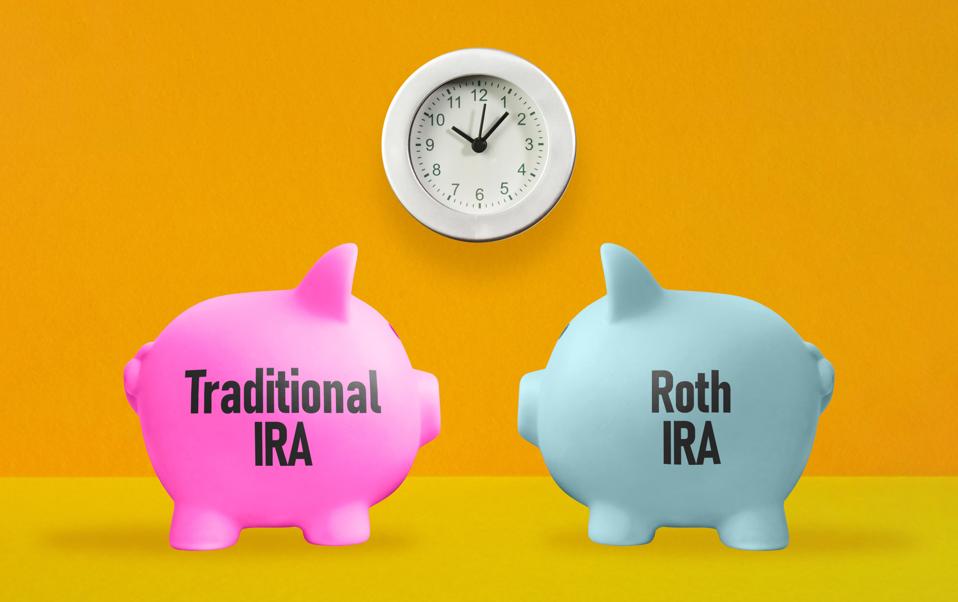
Traditional IRA vs Roth IRA: Understanding the Difference
Both traditional and Roth IRAs provide tax advantages, but those advantages generally occur at different times.
Traditional IRA: Contributions may be tax-deductible depending on eligibility and income. Investments generally grow tax-deferred, and withdrawals are typically subject to ordinary income tax, except for amounts attributable to previously taxed contributions.
Roth IRA: Contributions are made with after-tax dollars. Investments may grow tax-free, and qualified withdrawals are generally tax-free.
A Roth conversion involves transferring funds from a traditional retirement account into a Roth account. The taxable portion of the converted amount is generally included in income for the year of conversion.
That creates an important trade-off: Pay taxes now or potentially pay them later.
The appropriate choice depends on more than whether tax-free withdrawals sound attractive.
1. Your Current Tax Bracket May Make a Roth Conversion Expensive
One of the first considerations is the tax cost of converting.
Imagine you’re still working and earning a substantial income. Converting a large traditional IRA balance could increase your taxable income and potentially move some of that income into a higher marginal tax bracket.
The additional income could also affect other tax-related calculations.
Depending on your circumstances, a Roth conversion may influence:
- The taxation of Social Security benefits
- Medicare Part B and Part D income-related premiums (IRMAA)
- Eligibility for certain deductions or tax benefits
- The net investment income tax calculation
If you anticipate being in a lower tax bracket during retirement, paying taxes on a conversion today may not be advantageous.
However, future tax rates and personal circumstances are uncertain, which is why individual tax projections matter.
2. Charitable Giving May Favor Keeping a Traditional IRA
For retirees who regularly support charitable organizations, traditional IRAs can provide an important planning opportunity.
Individuals age 70½ or older may be eligible to make qualified charitable distributions (QCDs) directly from an IRA to qualifying charities.
When applicable requirements are satisfied, these distributions can be excluded from taxable income and may count toward required minimum distributions.
For someone planning significant charitable gifts, maintaining traditional IRA assets may preserve opportunities that would otherwise be reduced by converting those funds to a Roth IRA.
QCDs are subject to eligibility requirements, annual limits, and other rules.
A Roth conversion shouldn’t be evaluated without considering how charitable giving fits into your retirement and estate planning goals.
3. Paying Conversion Taxes Requires Careful Planning
A Roth conversion creates a tax obligation even though the converted money remains invested in a retirement account.
Many individuals prefer to pay conversion taxes using funds outside their retirement accounts.
Using outside funds may preserve more money inside the Roth IRA for potential future tax-free growth.
However, paying the taxes from other assets can reduce available liquidity and may create additional tax consequences if investments must be sold.
If you don’t have sufficient accessible assets to cover the conversion taxes, the financial trade-offs deserve particularly careful consideration.
And unlike in the past, a completed Roth conversion generally cannot be reversed through recharacterization.
That makes evaluating the potential tax consequences before converting especially important.
4. Your Beneficiaries’ Tax Brackets Could Change the Equation
Roth conversions can also affect what beneficiaries eventually receive.
Inherited traditional IRA distributions are generally taxable to beneficiaries, except for any applicable after-tax basis. Qualified distributions from inherited Roth IRAs are generally tax-free.
However, that doesn’t automatically mean converting is better for your heirs.
Consider a retiree who is currently in a relatively high tax bracket but expects to leave retirement assets to adult children in lower tax brackets.
Paying conversion taxes at the parent’s higher rate may create a different family-wide tax outcome than leaving traditional IRA assets for beneficiaries to withdraw later.
Many non-spouse beneficiaries must empty inherited IRAs within 10 years, although annual distribution requirements and exceptions depend on individual circumstances.
Estate planning should consider both the value of inherited assets and how those assets may be taxed.
5. The Years Between Retirement and RMDs May Offer Opportunities
For some retirees, the period after leaving the workforce but before required minimum distributions begin may provide opportunities to evaluate Roth conversions.
During these years, employment income may have stopped while Social Security benefits or RMDs have not yet begun.
That could create comparatively lower-income years.
However, RMD starting ages vary based on birth year, and Roth conversions can affect other financial considerations even during lower-income periods.
Rather than converting an entire account at once, some individuals may benefit from evaluating partial conversions over multiple years.
The appropriate approach depends on projected taxes, income needs, Medicare considerations, and the broader retirement plan.
6. Health Savings Accounts May Deserve Attention Too
For eligible individuals, a Health Savings Account (HSA) may provide another tax-advantaged savings opportunity.
HSAs can offer tax-deductible or pretax contributions, tax-deferred growth, and tax-free withdrawals for qualified medical expenses.
However, eligibility requirements apply, and individuals enrolled in Medicare generally cannot make additional HSA contributions.
HSAs serve a different purpose than IRAs, so the appropriate contribution strategy depends on healthcare needs, eligibility, and overall financial circumstances.
Frequently Asked Questions About Traditional and Roth IRAs
Is a Roth IRA always better than a traditional IRA?
No. Roth IRAs offer potential tax-free qualified withdrawals, but traditional IRAs may be advantageous when current tax rates are higher than expected future rates or when certain charitable giving strategies are important.
Can a Roth conversion increase Medicare premiums?
Yes. Taxable Roth conversions may increase modified adjusted gross income used to calculate Medicare IRMAA. Medicare generally uses income information from two years earlier when determining these additional premiums.
Should I convert my entire traditional IRA to a Roth IRA?
Not necessarily. A full conversion can create substantial taxable income. Partial conversions may be worth evaluating, but the appropriate strategy depends on your individual tax situation and retirement objectives.
Investment Types and Accounts to Consider
When evaluating traditional and Roth IRA strategies, several accounts may be relevant:
- Traditional IRA: Tax-deferred retirement savings with generally taxable withdrawals.
- Roth IRA: After-tax retirement savings with potentially tax-free qualified withdrawals.
- Traditional and Roth 401(k): Employer-sponsored retirement accounts with different tax treatments.
- Health Savings Account (HSA): Tax-advantaged savings for eligible healthcare expenses.
- Brokerage Account: Taxable investments that may provide liquidity for retirement expenses or conversion taxes.
Next Steps: Should You Keep Your Traditional IRA or Consider a Roth Conversion?
The decision isn’t simply about whether Roth IRAs or traditional IRAs are better.
It’s about understanding which approach may be appropriate for your retirement income, tax situation, charitable goals, and estate plan.
At Nova Wealth Management, we help individuals and families in Bonita Springs, Naples, Estero, Fort Myers, Dallas, and throughout the country evaluate retirement income strategies and tax-aware financial planning.
Before making a Roth conversion, consider reviewing how the decision could affect your broader financial plan.
Schedule your planning session with Nova Wealth Management.
Contact Nova Wealth Management:
Toll-Free: 1-888-677-9910
Bonita Springs: 239-444-1794
Dallas: 214-272-2336
Source: Forbes, Bob Carlson, October 29, 2026. Licensed through AdvisorStream.
Disclosure: This material is provided for general educational and informational purposes only and does not constitute individualized investment, tax, or legal advice. Roth conversions are generally taxable and cannot be reversed through recharacterization. Retirement account rules and tax laws may change. Consult qualified tax and financial professionals before making retirement account decisions. Investing involves risk, including possible loss of principal. Nova Wealth Management, Inc. is a Registered Investment Advisor.




Sorry, the comment form is closed at this time.